A Lithuanian home pairs an existing rooftop PV array with a 12.8 kWh high voltage stack battery to keep solar energy on site and add backup capability.
| Item | Detail |
|---|---|
| Location | Lithuania |
| Project type | Residential, grid-connected hybrid with backup |
| Battery | Enershare Energy-CORE 1.0 high voltage stack battery |
| Usable capacity | 12.8 kWh (4 x 3.2 kWh modules ) |
| Nominal voltage | 256 V (operating window 216 to 292 V) |
| Inverter | Solis hybrid inverter |
| PV | Existing rooftop array on a pitched roof |
| Applications | Solar self-consumption, peak shaving, backup power |
| Certification | CE, VDE, UKCA, IEC 62619, UN38.3 |
| Warranty | 10 years |
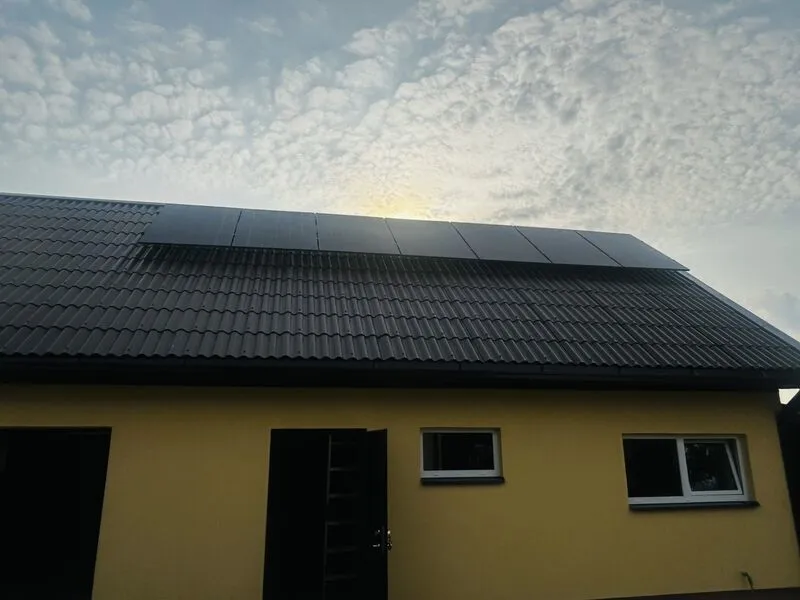
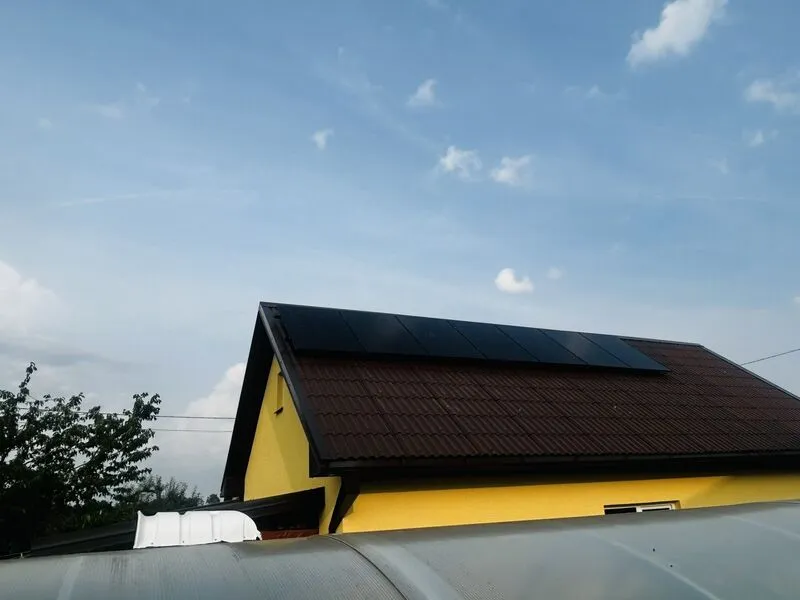
The house sits in Lithuania, and was already generating its own electricity from a rooftop PV array. What it could not do was keep it.
Rooftop production peaks at midday, when the house is empty and loads are lowest. Household demand peaks in the morning and again in the evening. The surplus went to the grid, and Lithuania's export compensation sits well below the retail price the household pays for power bought back after sunset.
Lithuania is also a field of legacy battery retrofit. A large base of rooftop PV was installed three to five years ago, when battery prices were still high. Those systems are now the most natural candidates for a battery add-on.
The selected solution is a single Enershare Energy-CORE 1.0 high voltage stack battery rated at 12.8 kWh. The tower stands on the floor of the utility room. The Solis hybrid inverter is wall-mounted above it, with cabling in trunking between the two.
The battery runs at 256 V nominal, with an operating window of 216 to 292 V and a round-trip efficiency of at least 96 percent. The integrated BMS manages pack voltage, current, temperature and cell balancing.
Share your inverter model, system voltage and target capacity with our engineers and they will confirm compatibility and recommend a configuration.
Most residential retrofit projects in the region land between 9.6 kWh and 19.2 kWh. 12.8 kWh covers the evening and night-time consumption of an average detached house with a mid-sized rooftop array.
No. The Energy-CORE 1.0 tower is rated IP65 in an aluminium enclosure and operates from -10 to +55 degrees Celsius, covering basements, garages and utility rooms across the Baltic.
Yes. Up to eight modules per tower and up to six towers in parallel, for a maximum of 153.6 kWh on the same platform.
Contact Us
For more details about Enershare Energy-CORE series residential energy storage solutions, email us at marketing@enershare.cn


